Safety compliance you can see — and prove.
GuardianEye watches the CCTV feeds you already have for the PPE and site-safety rules you configure, alerts a supervisor, and keeps the evidence of what was seen, who reviewed it and how it was closed.
- Your camerasApproved CCTV feeds already in place
- Your rulesConfigured PPE and site-safety conditions
- Your peopleA supervisor reviews and closes every alert
A live queue. Work it.
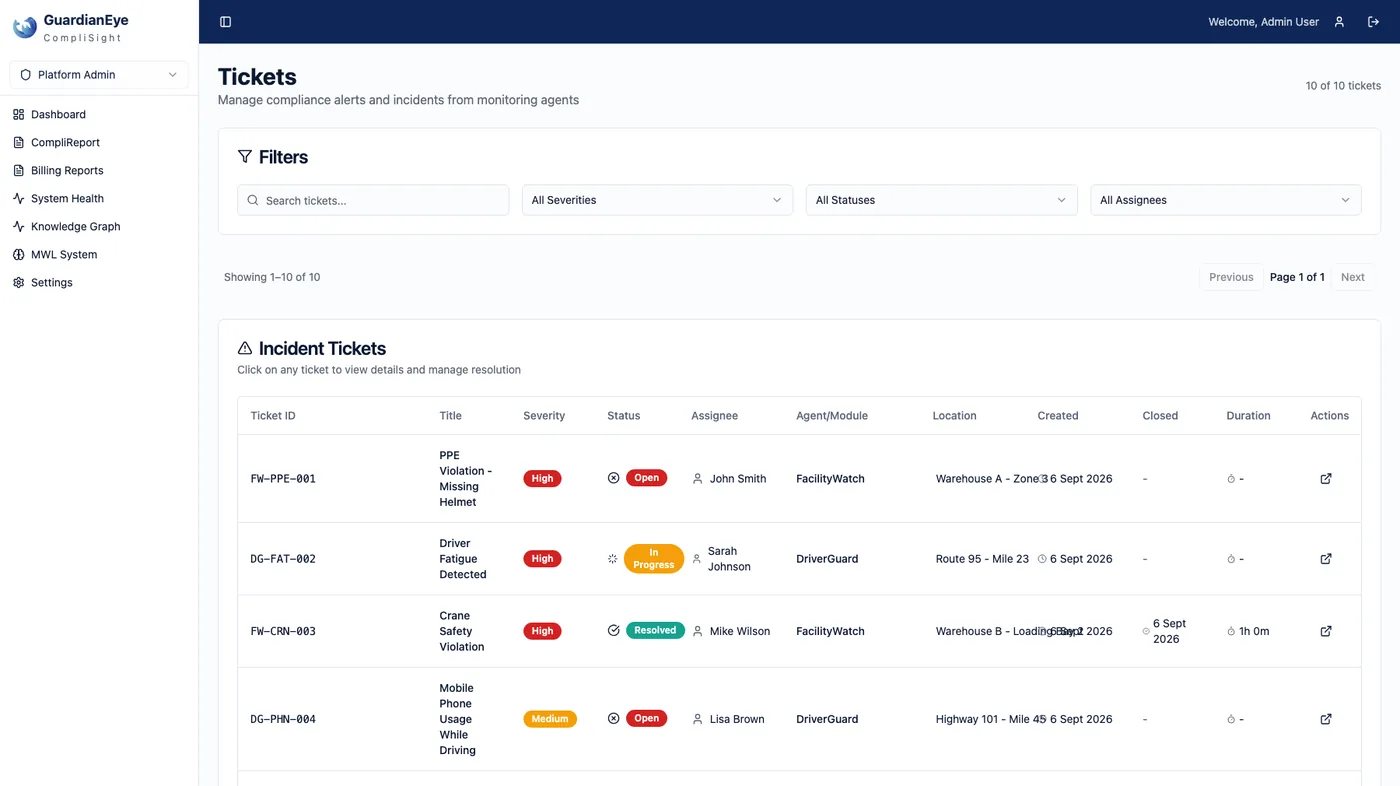
An interactive example of the AlertFlow queue, built from the product’s own sample tickets. Filter, open one, close it — and watch the report change. Example data, not customer data.
No tickets match these filters.
Site summary, generated from the queue
By severity
By status
By module
Every line traces to a ticket, and every ticket to a frame and a name. Reviews you made above appear here, with you as the reviewer.
Five steps, each one kept.
- 1
Detect
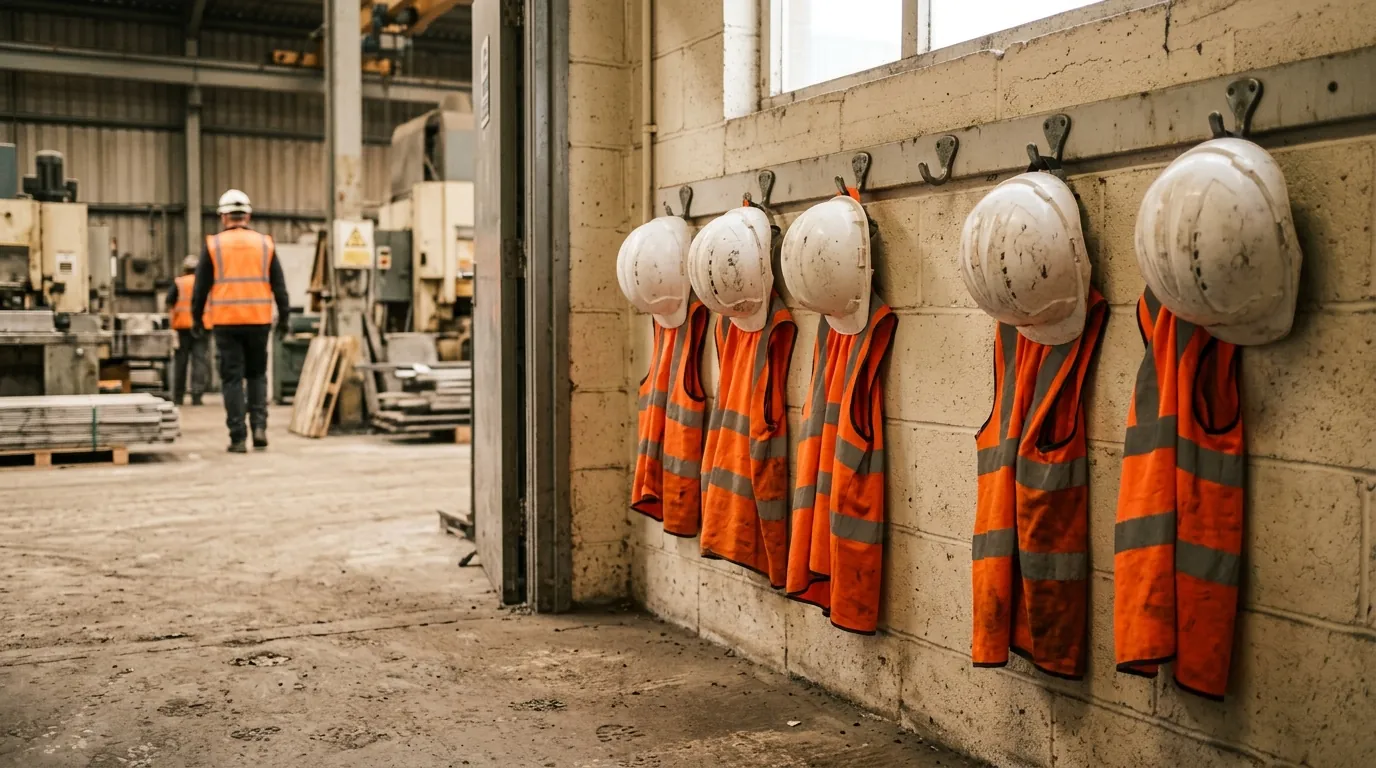
Agreed safety rules and camera context identify an event worth a look — a missing helmet in a hard-hat zone, a person where the floor plan says no one should be.
- 2
Alert
AlertFlow opens a ticket and the supervisor on duty gets it with the visual context, not a raw stream to trawl through.
- 3
Review
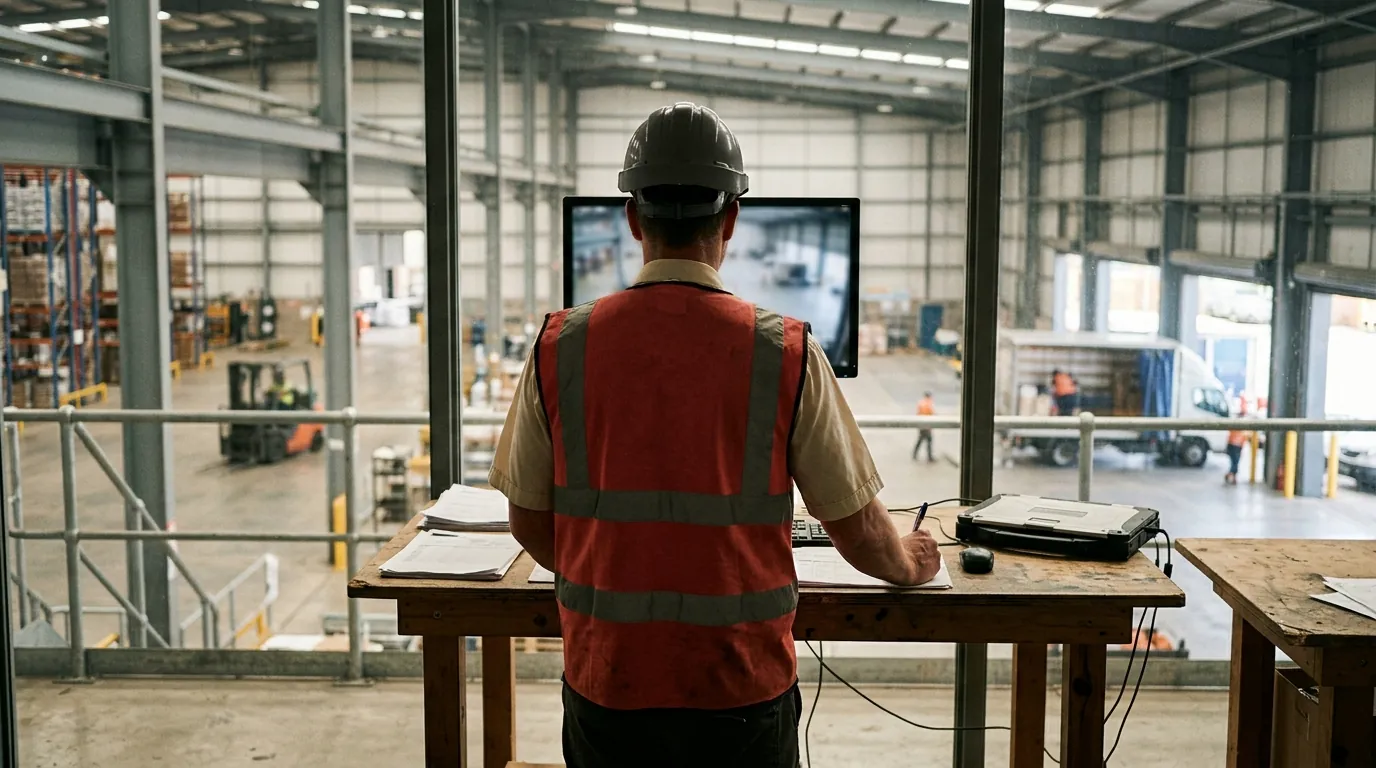
A person looks before anything is confirmed or closed. The detection proposes; the supervisor decides.
- 4
Evidence
Visual context, status, reviewer and follow-up action are retained together as one record.
- 5
Report
When an auditor asks, the answer is already written: what was seen, who looked, what was decided.
One discipline, three places to point it.
Each agent is a set of modules. Each module raises tickets into the same queue, reviewed by the same people.
What your team actually opens.
AlertFlow
Every detection becomes a ticket with severity, status, assignee, location and incident evidence.
CompliReport
Audit reports built from the tickets and their evidence rather than assembled by hand.
CompliAgent
Ask about your site in plain language — what is open, which zones, who closed what.
Escalation & roles
Notifications by email, SMS or dashboard; auto-escalation by severity; named roles.
Compliance certificates
Generated per site from the retained record, when the evidence supports one.
The whole product
Agents, modules, the queue and the record — on one page.
Four kinds of floor, one discipline.
What GuardianEye does not do
In safety, being clear about the edge matters more than anywhere else.
It does not infer emotions
Detection is limited to the configured PPE and site-safety rules. It makes no inference about how a worker feels or intends.
It does not replace safety management
It strengthens supervision and audit evidence. Responsibility for safety stays with the people who hold it.
It does not act on its own
An alert is reviewed and closed by a person, and that review is part of the record.
It does not need new cameras
It analyses approved CCTV feeds already in place.
The discipline behind the camera.
GuardianEye is the site-safety brand of CloudSeals. The product behind it is CompliSight, and it follows the same operating discipline as every CloudSeals application: TrustOps sets how a decision gets made, the application does the work, and Evidence Fabric keeps what happened.
- TrustOps
- The operating discipline for accountable AI — policy boundaries, human approvals and audit-ready evidence in the workflow itself.
- Evidence Fabric
- The shared evidence layer. It records source context, purpose, policy and authority context, outcomes, approvals and overrides, downstream actions and final results.
- CompliSight
- The CloudSeals application for industrial safety — the detection, alerting and evidence you see on this site.
Straight answers
What does GuardianEye actually do?
It analyses approved CCTV feeds for the PPE and site-safety rules you configure, sends an actionable alert when one is met, and keeps evidence of the detection, the review and the closure. GuardianEye is the site-safety brand of CloudSeals; the product behind it is CompliSight.
Do we need new cameras?
No. It works from approved CCTV feeds that are already in place.
Does it watch individual workers?
It detects the configured PPE and site-safety conditions it has been set up to look for. It is designed to strengthen supervision and audit evidence, not to infer how a worker feels or to replace safety management.
Who closes an alert?
A person. A supervisor reviews the alert with its context and closes it, and that review becomes part of the record alongside the detection.
Which industries is it built for?
Construction, logistics, ports and marine, and food processing — each as its own module with its own rule set. The assessment establishes which rules matter on your particular floor.
What does an auditor see?
What was seen, who looked at it, what was decided and what followed — the visual context, the status, the reviewer and the follow-up action, retained together.
Start with one site.
A site assessment looks at the cameras you have, the rules that matter on your floor and how the evidence would reach your auditor. Twenty minutes to find out whether it fits.